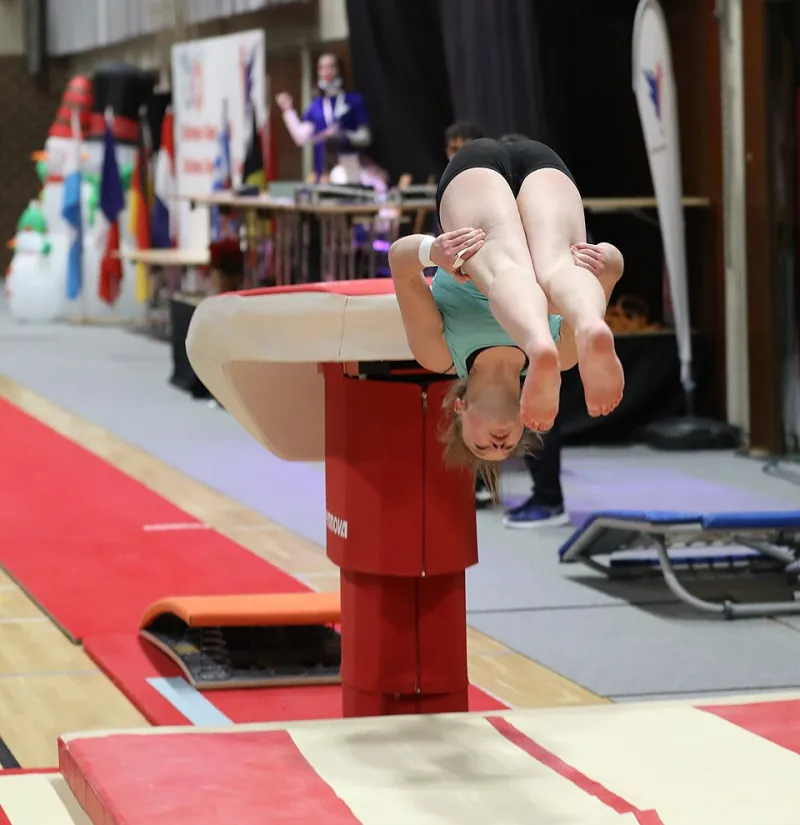
Stronger Between the Ears: How Cleveland's Competitive Athletes Are Winning the Mental Battle
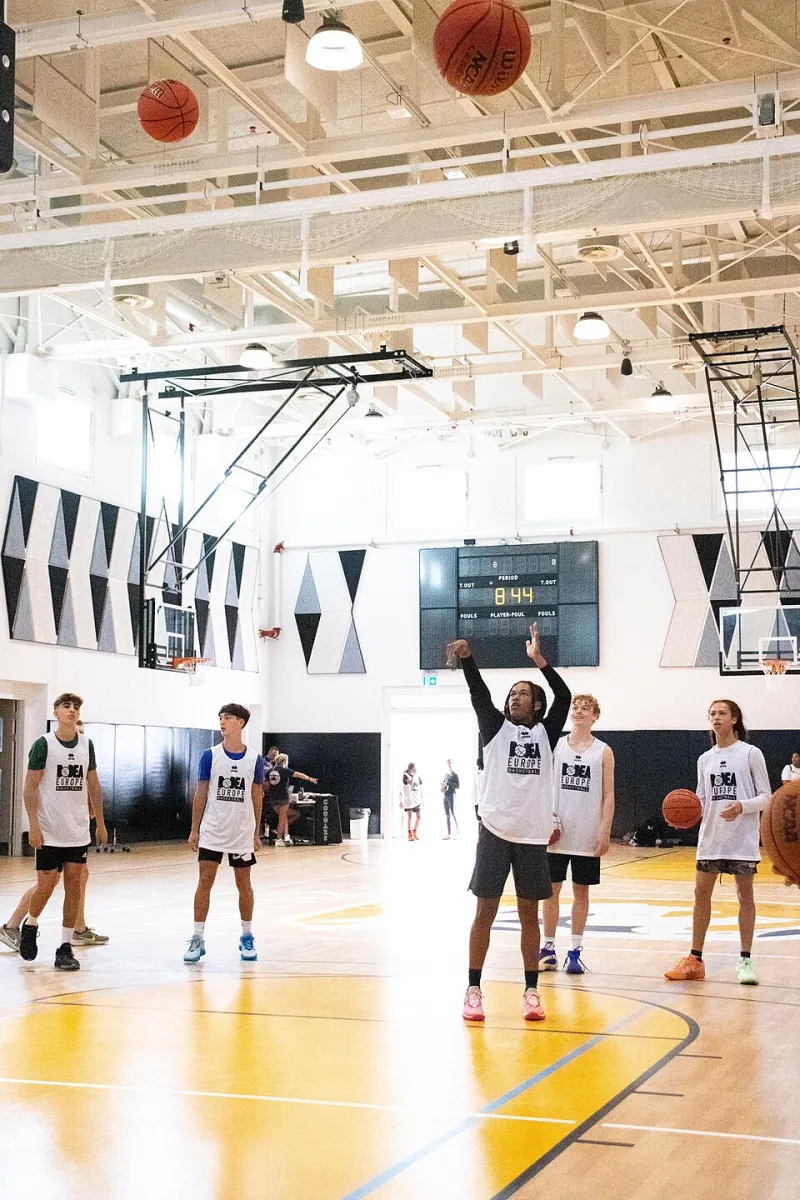
Photo: U.S. Civilian DODEAE by Jessica Tackaberry, Public domain, via Wikimedia Commons
Somewhere around the third mile of a grueling race, or in the final seconds before a big lift, or standing at the edge of a pool waiting for a starting beep — that's where championships are actually decided. The physical preparation happened months ago. What takes over in that moment is something else entirely.
Ask Cleveland-area athletes and coaches about mental training and you'll get a wide range of answers. Some will tell you it changed everything. Some will admit they were skeptical at first. Almost none of them will tell you it doesn't matter.
The Shift That's Been Building
For a long time, mental conditioning occupied a weird, slightly embarrassed corner of athletic development. Coaches acknowledged it existed. Athletes knew it mattered. But actually doing something about it — building a structured mental training program the same way you'd build a periodized lifting plan — felt like territory that belonged to professional sports or Olympic programs with unlimited budgets.
That perception has been changing fast, and Cleveland is right in the middle of that shift.
Over the past several years, sports psychology resources have become significantly more accessible to competitive athletes at all levels across Northeast Ohio. University-affiliated programs, private practitioners, and community-based athletic organizations have all expanded their mental performance offerings. The result is that a sixteen-year-old club swimmer in Solon or a young wrestler from a Cleveland public school program now has access to tools that, a decade ago, were largely reserved for professionals.
"We used to treat mental training like a luxury add-on," one youth sports program director in the Cleveland area noted. "Now it's baked into what we do from the beginning. It's not separate from athletic development — it is athletic development."
What Mental Training Actually Looks Like
For people outside the sports psychology world, "mental training" can conjure some vague images — maybe someone lying on a couch talking about their feelings, or a motivational poster with an eagle on it. The reality is considerably more structured and, frankly, more interesting.
Visualization and imagery work is one of the most widely used techniques among Cleveland athletes working with mental performance coaches. The process involves systematically rehearsing competition scenarios in vivid detail — not just imagining success, but mentally walking through the specific physical sensations, environmental cues, and decision-making moments of a performance. Research consistently supports its effectiveness, and local practitioners describe athletes using it as part of their pre-competition routines just as naturally as they'd do a warmup.
Another major area is arousal regulation — learning to manage the physiological stress response that comes with high-stakes competition. Breathing protocols, progressive muscle relaxation, and attentional focus techniques all fall under this umbrella. For youth athletes especially, developing these tools early can be transformative, giving them resources to manage nerves in ways that actually improve rather than inhibit performance.
Process-focused goal setting is another cornerstone. Rather than fixating on outcomes — a medal, a qualifying time, a win — athletes learn to direct their attention toward the controllable elements of performance. It sounds simple, but rewiring competitive focus from results to process is genuinely hard, and it's something that takes consistent practice.
Cleveland Programs Leading the Way
Several local organizations deserve credit for pushing mental performance to the forefront of athlete development in Northeast Ohio.
University-based sports science programs in the region have been particularly active in making mental performance coaching available to student-athletes and, increasingly, to community-level competitors through outreach partnerships. Case Western Reserve's kinesiology resources and Cleveland State's athletic training infrastructure have both contributed to a growing culture of evidence-based mental conditioning in the area.
Club programs in swimming, track and field, and gymnastics have also stepped up. A number of coaches at the club level have pursued additional certification in mental performance coaching, meaning athletes are getting integrated support rather than having to seek out separate providers. That integration matters — it means the mental and physical sides of training are being developed in conversation with each other, not in isolation.
There are also private practitioners in the Cleveland metro area who specialize specifically in athletic mental performance, working with everyone from youth competitors to athletes with serious Olympic aspirations. The growth of this professional community reflects real demand, and athletes who've worked with these specialists consistently describe measurable differences in how they handle pressure situations.
What Athletes Are Saying
The most compelling evidence for mental training's impact comes from the athletes themselves. Across Cleveland's competitive community, you'll hear variations on the same story: the physical preparation was there, the fitness was there, but something kept getting in the way — until it didn't.
One recurring theme is the experience of competition anxiety that had previously derailed performances suddenly becoming manageable, not through elimination but through familiarity. Athletes describe learning to recognize the physical signs of pre-competition stress and reframe them — treating nervousness as readiness rather than as a warning signal.
Another common thread is the development of a consistent pre-performance routine. Something that might seem superstitious from the outside — a specific sequence of actions and mental cues before competing — is actually a carefully constructed psychological anchor that helps athletes access a focused, confident mental state on demand.
"I used to get to big meets and feel like a completely different athlete than I was in practice," one Cleveland-area competitive swimmer described. "Working on the mental side didn't make the nerves go away. It just meant they stopped running the show."
Building It Into the Foundation
The most exciting development in Cleveland's mental performance landscape isn't what's happening at the elite level — it's what's happening with youth athletes. Programs that introduce mental training concepts early, as a normal and expected part of athletic development, are creating competitors who arrive at high-level competition already equipped with psychological tools that previous generations had to figure out on their own, if at all.
That's a genuine competitive advantage. And it's one that Northeast Ohio's athletic community is increasingly smart enough to invest in.
The physical work still has to happen. The miles still need to get logged, the technique still needs to get refined, the strength still needs to get built. But the coaches and practitioners working in Cleveland's mental performance space are making a compelling case that none of that physical investment reaches its full potential without the mental foundation to support it.
Between the ears, Cleveland is getting serious. And the results are starting to show.