Behind Every Medal Is a Family: How Cleveland Households Are Raising Tomorrow's Elite Competitors
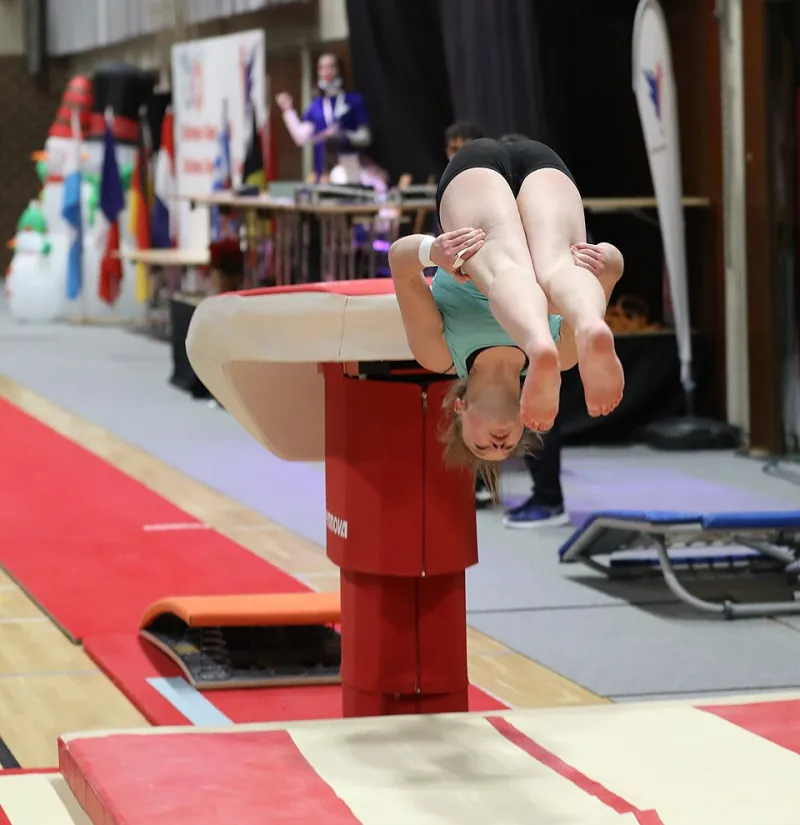
Photo: Martin Rulsch, Wikimedia Commons, CC BY-SA 4.0, via Wikimedia Commons
It starts, almost always, with something small. A kid who won't stop kicking a soccer ball against the garage door. A daughter who begs to stay late at the community pool. A son who races every single person he passes on the sidewalk — and wins. For dozens of families across the greater Cleveland area, that small spark has grown into something much bigger: a full-on commitment to elite athletic development that reshapes schedules, budgets, and sometimes entire family identities.
But what does that journey actually look like from the inside? We sat down with parents, coaches, and the young athletes themselves to find out.
The Decision That Changes Everything
For most Cleveland families, the pivot from recreational sports to serious training doesn't happen overnight. It tends to creep up on you.
"We didn't set out to raise an elite gymnast," says Denise Kowalski, whose 14-year-old daughter Mara now trains 22 hours a week at a Northeast Ohio gymnastics academy. "We just kept noticing that she was different — more focused, more driven than the other kids. The coaches kept pulling us aside. Eventually, you have to make a choice."
That choice comes with real costs. Denise estimates the family spends close to $18,000 annually on training fees, travel to regional competitions, equipment, and coaching consultations. Her husband adjusted his work-from-home schedule to handle afternoon pickups. Their older son has grown used to family vacations that double as meet weekends.
It's a story that repeats itself across Cleveland's athletic landscape, whether the sport is wrestling, swimming, track and field, or figure skating. And coaches here say the families who navigate it best share a few key traits.
What Coaches Are Actually Looking For in a Family
"Talent is maybe 30 percent of it at the youth level," says Marcus Webb, who has coached competitive swimmers at a Westlake aquatics club for over a decade. "The rest is environment. Is the kid getting enough sleep? Is there stress at home? Are the parents supportive without being overbearing? I can teach technique. I can't teach a family how to function."
Webb has seen plenty of gifted kids flame out by the time they hit their mid-teens — not because they lacked ability, but because the pressure around them became unsustainable. He now holds informal "family orientation" sessions before accepting new competitive-track athletes, where he lays out expectations for parents as clearly as he does for the kids.
"I tell parents straight up: your job is to make sure they're fed, rested, and emotionally regulated. That's it. Don't coach from the bleachers. Don't debrief every performance on the car ride home. Let them decompress."
It sounds simple. It's apparently very hard.
The Training Philosophy That's Producing Results
Across Northeast Ohio's more successful youth programs, a common training philosophy is emerging — one that prioritizes long-term athlete development over short-term wins. Rather than specializing kids early and grinding them toward burnout, many Cleveland-area coaches are embracing a more periodized approach: building broad athletic foundations in early childhood, introducing sport-specific skills gradually, and ramping up intensity only as the athlete matures physically and mentally.
"We don't want kids peaking at 12," says Renata Flores, a youth track and field coach based in Parma who has sent multiple athletes to AAU Junior Olympic qualifiers. "We want them peaking at 22, or 26, or whenever their Olympic window opens. That requires patience from everyone — coaches, parents, and the athletes themselves."
Flores emphasizes the importance of rest and cross-training, often encouraging her young sprinters to play basketball or volleyball in the off-season to develop coordination and competitive instincts in a lower-stakes environment.
The Athlete's Perspective
Fifteen-year-old Darius Okafor has been wrestling competitively since he was eight years old. He's currently ranked in the top 20 nationally in his age and weight class, and he's already fielded interest from two Division I college programs. He's also, by his own admission, a pretty normal teenager who likes video games and thinks about quitting sometimes.
"There are definitely days where I don't want to go to practice," he says with a shrug. "Like, everybody has those. But then I go, and I feel better after. I think that's the thing — you have to learn to trust the process even when it feels pointless."
His father, Emmanuel, says the family tries hard not to make wrestling Darius's entire identity. He still goes to school dances. He still has a social life. "If the sport ever stops being something he wants, we stop," Emmanuel says firmly. "We're not doing this for us. We're doing it because he wants it."
That distinction — athlete-driven versus parent-driven motivation — is something coaches across Cleveland cite as the single biggest predictor of long-term success.
Practical Takeaways for Families Just Starting Out
If your kid is showing serious potential and you're wondering what comes next, Cleveland's athletic community has some grounded advice:
Start with the right program, not the most expensive one. Reputation and coaching quality matter far more than facility bells and whistles. Ask about coach credentials, athlete retention rates, and long-term development philosophy before signing anything.
Build a support network. Connect with other sports families in your area. The logistical load — travel, scheduling, financial planning — is much easier when you're sharing information and occasionally carpooling.
Keep school a priority. Elite athletic development and academic success are not mutually exclusive. Many Cleveland coaches explicitly require athletes to maintain their grades, and for good reason: the discipline required in the classroom translates directly to competitive performance.
Let your kid lead. Check in regularly about whether they're still enjoying the process. Burnout is real, and it's far more common in athletes whose motivation is external rather than internal.
Cleveland has always been a city that grinds — that finds ways to compete and produce despite being overlooked on the national stage. The families raising elite young athletes here are no different. They're doing the invisible work, day after day, because they believe in what's possible. And more often than you'd expect, they're right.