No Paycheck, All Heart: The Neighbors Who Keep Cleveland's Sports Calendar Running
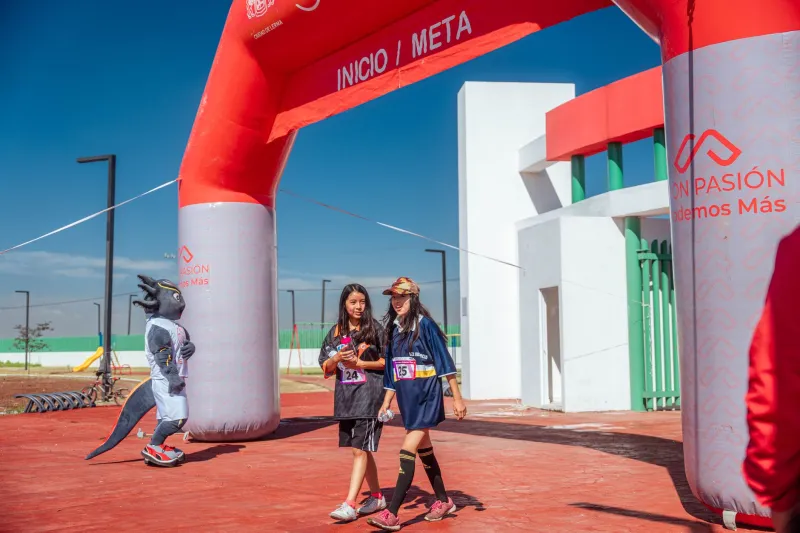
On a raw Saturday morning in April, while most of Cleveland is still deciding whether to get out of bed, Doreen Whitfield is already at the Edgewater Park start line with a clipboard, a roll of bib pins, and a thermos of coffee she brought for other people.
She's been volunteering at Northeast Ohio road races and track meets for 23 years. She has never collected a check for any of it.
"People ask me why I do it," she says, laughing. "I tell them — somebody did it for my kids. Now it's my turn."
The Invisible Workforce
Here's a number that should stop you cold: by conservative estimates, the region's youth sports events, charity races, and amateur competitions depend on somewhere between 15,000 and 20,000 volunteer shifts every year. Course marshals. Timing-table operators. Scorekeepers at ninth-grade volleyball tournaments. The person in the tower at Brookside calling swim heats through a scratchy PA.
None of them are on a payroll.
Using the federal rate for volunteer time — currently north of $33 an hour — the annual labor value behind Cleveland's grassroots sports economy plausibly runs into the millions of dollars. A single weekend youth basketball tournament can easily consume 300 volunteer hours. The Cleveland Marathon alone mobilizes well over a thousand unpaid helpers across race weekend.
If those hours vanished overnight, the events wouldn't shrink. They'd stop.
Thirty Years at the Timing Table
Walk into nearly any indoor track meet at a Cleveland-area field house and there's a decent chance you'll see Ray Kowalczyk, 71, hunched over a timing console with reading glasses pushed up on his forehead.
A retired machinist from Parma, Ray started timing high school meets in the early '90s when his daughter ran the 400. She graduated in 1996. Ray kept showing up.
"Somebody's got to work the clock," he shrugs. "The kids train four, five months for eleven seconds of racing. The least I can do is make sure somebody's watching it."
Ray estimates he puts in 60 to 80 volunteer days a year between track, cross country, and community 5Ks. He doesn't want a title. He doesn't want recognition. When pressed, he'll admit the free event T-shirts have gotten better over the decades, and that's about as far as the self-congratulation goes.
The Concession Stand Economy
Then there's the tier of volunteering that never makes the highlight reel: parents working the gate, flipping burgers, and selling Gatorade so their club can afford new uniforms.
At a youth soccer tournament in Strongsville last fall, the concession stand behind the main pitch grossed roughly $4,200 in a weekend — money that went straight into the club's referee-fee fund. Every dollar of that revenue was produced by unpaid labor, mostly parents rotating through two-hour shifts.
It's a quiet subsidy baked into the cost of youth sports everywhere in America, but Cleveland's version has a particular flavor. This is a town with a deep blue-collar memory, where the idea that you show up and do your part isn't a networking strategy. It's just what you do.
Would the System Survive Without Them?
Short answer: no.
Municipal recreation budgets across Cuyahoga County have been flat or shrinking for years. Event directors talk openly about the math being impossible with paid staff. One meet organizer told us that hiring out every volunteer role at a typical weekend invitational would add $8,000 to $12,000 in costs — a figure that would either double registration fees or kill the event entirely.
That means the volunteer corps isn't a nice-to-have. It's load-bearing infrastructure. And like a lot of infrastructure in Northeast Ohio, it's aging.
"Our average volunteer is probably in their late fifties," one race director admits. "We need the next generation to step in, and they will — but we have to make it easy. Shorter shifts. Bring-your-kid roles. Make it feel like belonging, not obligation."
How to Raise Your Hand
The good news is that getting involved here has never been simpler. The Cleveland Marathon, the Greater Cleveland Sports Commission, the various youth track clubs, and nearly every suburban rec department maintain volunteer sign-up pages that take about five minutes to complete.
You don't need expertise. Ray learned the timing console from a guy who taught him in one afternoon. Doreen started by handing out water.
The season never really stops in this town — indoor track melts into spring road races, which melt into summer ball fields and fall tournaments. Somewhere in that calendar there's a shift with your name on it, waiting for someone who never expects a paycheck.
As Doreen puts it, zipping up her fanny pack before the next wave goes off: "The gun goes off either way. Question is whether somebody's there to see it."