Every Lane, Every Court, Every Ice: Cleveland's Adaptive Athletes Are Building a Real Pipeline
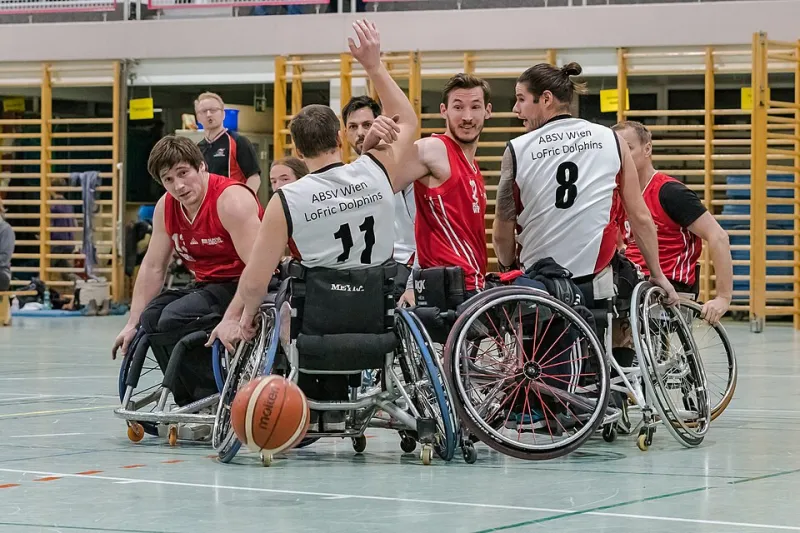
Photo: Isiwal, CC BY-SA 4.0, via Wikimedia Commons
On a Tuesday night in a Cleveland rec center, the loudest sound is not a whistle. It is the squeak of wheelchair tires, the slap of a goalball against the floor, and the kind of sideline chatter that happens when everybody knows the drill. This is not a charity exhibition. It is a practice. There is a roster to set, a defense to fix, and a regional tournament on the calendar.
That distinction matters. For years, adaptive sports in Northeast Ohio often lived in the glow of one-off clinics and awareness events. Those still matter. But the scene in 2026 is increasingly built around something more durable: regular practice schedules, trained coaches, loaner equipment, and a clear next step for athletes who want to compete beyond their own neighborhood.
Four Sports, One Goal
Wheelchair basketball remains the most visible entry point. Local clubs run open gyms and skills nights, then split into practice groups by experience and classification. The vibe is competitive but practical. Newcomers learn chair handling, passing angles, and how to avoid the dreaded tip-over. Veterans work on pick-and-roll timing and transition defense. Coaches talk about the same things you hear in any gym: spacing, communication, and free throws.
Goalball brings a different kind of intensity. Played indoors by athletes with visual impairments, the game is silent by design. Players track a bell-filled ball by sound, and spectators learn quickly to keep quiet during live play. The learning curve is steep, but local sessions are built for it. Volunteers set ropes and orientation marks, coaches teach body positioning, and experienced players model how to read a court without seeing it.
Sled hockey adds ice to the mix. Northeast Ohio clubs and rink partners create practice blocks where athletes use sleds and shortened sticks, often with equipment loans for families who are testing the sport. The first session is usually about balance and steering. The second is about passing. By the third, somebody is asking about travel teams.
Adaptive rowing rounds out the pathway in a distinctly Cleveland way. The lake and the river are not just scenery here. They are training venues. Adaptive rowing programs use stable boats, adaptive seats, and dock support to get athletes on the water. Winter months push work indoors to ergs and technique sessions, but the spring launch is the goal. For athletes who thrive on endurance and open-air competition, rowing offers a route that does not depend on a gym ceiling.
Facilities Are the First Cut
The biggest unlock is not inspiration. It is access. An adaptive program needs more than a court. It needs wide doorways, accessible restrooms, parking that works in winter, and storage for equipment that cannot be carried home on a bus. School-park partnerships have become a quiet engine here. Districts with gyms and rinks can share space during off-hours. City rec centers can handle the community side. Nonprofits and therapy providers can supply equipment and volunteer training.
That partnership model is not glamorous, but it is how a pipeline actually gets built. A family should not have to drive to three counties to find one practice. A coach should not have to choose between a safe facility and a convenient one. When a rec center, a school, and a club agree on a recurring time slot, the sport stops feeling like a special event and starts feeling like a season.
From Rec Night to Regional Roster
The competitive ladder is still uneven by sport. Wheelchair basketball has the clearest club-to-tournament structure. Goalball relies on regional competitions and committed volunteers. Sled hockey requires ice time and travel. Adaptive rowing follows regatta calendars and weather. But the direction is consistent: local sessions feed regional teams, regional teams feed national development camps, and national camps feed the Paralympic pathway.
That does not mean every athlete is chasing a national team. Most are chasing the same things as any other competitor: a good practice, a fair game, a chance to improve. The pipeline works best when it serves both. A 14-year-old trying wheelchair basketball for the first time and a seasoned athlete preparing for a regional meet should be able to share the same gym without one path crowding out the other.
What Families Can Do This Season
Start with a call, not a purchase. Rec centers, school athletic departments, and adaptive sports organizations can point families toward current practice times and loaner equipment. Ask about classification, but do not let it become a barrier before the first session. Ask about transportation, personal care support, and whether a parent or sibling can volunteer on the sideline. Those questions are normal.
For athletes who are ready to compete, ask coaches what the next tournament actually requires: travel, fees, equipment checks, and eligibility paperwork. For volunteers, show up consistently. Adaptive sports do not need a crowd of one-day helpers as much as they need people who can set up chairs, run a clock, or learn to officiate a scrimmage.
The bench in adaptive sports should not be a place where athletes wait for a program to find them. In Cleveland, more and more, it is just a bench. The game is already moving.