Breaking Barriers in the Mistake by the Lake: How Cleveland's Young Women Are Owning the Olympic Conversation
Photo: Shixart1985, CC BY 2.0, via Wikimedia Commons
Walk into the Spire Institute on any given Tuesday morning and you'll notice something that might have seemed almost radical back in 1972: the track belongs to the girls.
Not because the boys aren't there — they are — but because the girls are simply louder about it. Louder in their ambition, louder in their numbers, and increasingly, louder in their results. Across Northeast Ohio, a quiet revolution has been gathering steam for years, and it's finally hitting a full boil.
This is what fifty-plus years of Title IX enforcement actually looks like when the investment finally catches up to the legislation.
From Legal Language to Real Lanes
Title IX was signed into law in 1972, but anyone who's been paying attention to women's sports in Cleveland knows the gap between policy and practice has always been wide. For decades, female athletes here navigated a landscape of hand-me-down equipment, shortened practice windows, and coaching staffs that treated girls' programs like a legal obligation rather than a genuine opportunity.
That calculus has shifted — and shifted fast.
"When I started coaching here twelve years ago, we were fighting for gym time," says one longtime track and field coach at a Cleveland Metropolitan School District high school who asked to remain unnamed to protect ongoing budget negotiations. "Now I've got a full roster, a full schedule, and parents calling me asking how to get their daughters into the program. That's a complete reversal."
Federal enforcement actions over the past several years — combined with increased scrutiny from the Ohio High School Athletic Association and pressure from parent advocacy groups — have pushed Cleveland-area school districts and recreational programs to genuinely equalize their investment. The numbers are still imperfect, but the trajectory is unmistakable.
Enrollment in girls' athletic programs across Cuyahoga County has climbed steadily since 2019, with sports like swimming, track, soccer, and rowing seeing some of the sharpest jumps. More importantly, the quality of programming has improved alongside the quantity.
The Faces Behind the Numbers
Amara, 16, is a sprinter from the Glenville neighborhood who started running competitively at age 11 through a community outreach program connected to a local recreation center. Two years ago, she qualified for the AAU Junior Olympics in the 200 meters. This past spring, she clocked a personal best that put her name on the radar of college scouts from three Big Ten programs.
"People always acted surprised when I told them I wanted to go to the Olympics," she says, lacing up after a late-afternoon workout. "Like that wasn't a real thing a girl from my neighborhood could say. But my coach never acted surprised. She just asked me what my next workout was."
That coach, a former collegiate 400-meter runner herself, is part of a growing cohort of female coaches who've returned to Cleveland specifically to build what they never had access to as young competitors.
"I came back because I saw the gap and I knew I could help close it," says the coach. "The talent was always here. The infrastructure just wasn't."
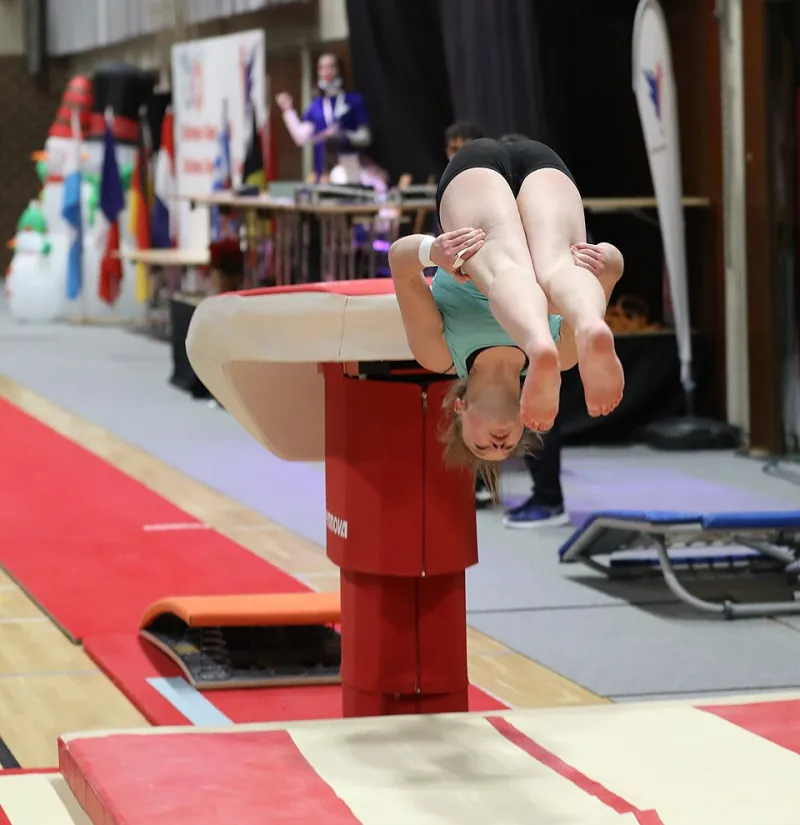
Across town in Westlake, a 14-year-old gymnast named Priya is navigating the club circuit with her eyes set firmly on the 2028 Olympic cycle. Her parents, both first-generation Americans, credit a local USA Gymnastics-affiliated club's scholarship program — funded partly through a Title IX compliance grant — with making elite training financially accessible.
"Without that program, we couldn't have afforded the coaching hours she needed," her mother says. "It changed everything for our family."
Rethinking Who Gets Recruited
Perhaps the most significant downstream effect of Cleveland's investment in women's athletics isn't visible at the local level at all — it shows up in national recruiting pipelines.
College coaches and national team scouts have started paying more attention to Northeast Ohio's female talent pool in recent years, a shift that several program directors attribute directly to the improved quality of local competition. When girls are training in better facilities, with better coaches, and competing in better-organized leagues, they show up to showcases and trials looking more prepared. And prepared athletes get noticed.
"The level of technical development I'm seeing from Cleveland-area girls at regional qualifiers has gone up noticeably," says one USA Swimming regional coordinator who works with Ohio-based clubs. "Five years ago, you'd occasionally see a standout. Now you're seeing clusters of well-developed athletes from the same programs. That tells you the infrastructure is working."
USA Track and Field, USA Gymnastics, and US Rowing have all seen increased representation from Ohio-based female athletes at junior national events over the past three years. While Cleveland can't claim sole credit for a statewide trend, program directors here are quick to point out that Cuyahoga County's investment has been a major driver.
The Work That Still Needs Doing
None of this means Cleveland has solved the equity puzzle. Not even close.
Coaches and administrators are candid about the gaps that remain. Transportation barriers keep girls in some neighborhoods from accessing the best programs. The coaching pipeline for women of color remains thin at the upper levels. And while funding has improved, it still doesn't match what's available for boys' programs in many districts.
"We celebrate the wins, and there are real wins to celebrate," says the director of a Northeast Ohio youth athletics nonprofit that focuses on underserved communities. "But we also have to be honest that a lot of the progress has benefited girls who were already in a position to take advantage of better resources. The girls who need the most support are still the hardest to reach."
That's a challenge the community is actively grappling with. Several Cleveland-area programs have launched targeted outreach initiatives aimed at middle school girls in lower-income zip codes, hoping to catch potential athletes before the dropout years — typically ages 12 to 14 — when participation rates fall off a cliff.
Early results from those initiatives are encouraging. But everyone involved knows that sustainable change requires sustained investment, not just one-time grants.
What the Next Generation Is Saying
Ask the girls themselves what's different, and their answers are surprisingly consistent: they feel seen in a way their older sisters and mothers didn't.
"My mom played volleyball in high school and she always talks about how the boys got everything — the good gym, the good coach, the pep rallies," says a 15-year-old soccer player from the Parma area who's currently training with a regional Olympic Development Program. "She comes to my games and she still can't believe how different it is. She cries sometimes. I think it's because she's happy for me but also a little sad for herself."
That emotional weight — the sense that this generation is carrying the ambitions of the ones that came before — is something coaches notice too. These young women aren't just competing for themselves. They're competing for every girl who was told to wait her turn, or that there wasn't room in the budget, or that Olympic dreams were somebody else's business.
Cleveland's female athletes are done waiting. And honestly? The results speak for themselves.