Let the Whistle Be a Whistle: A Case for Cutting Officials Some Slack
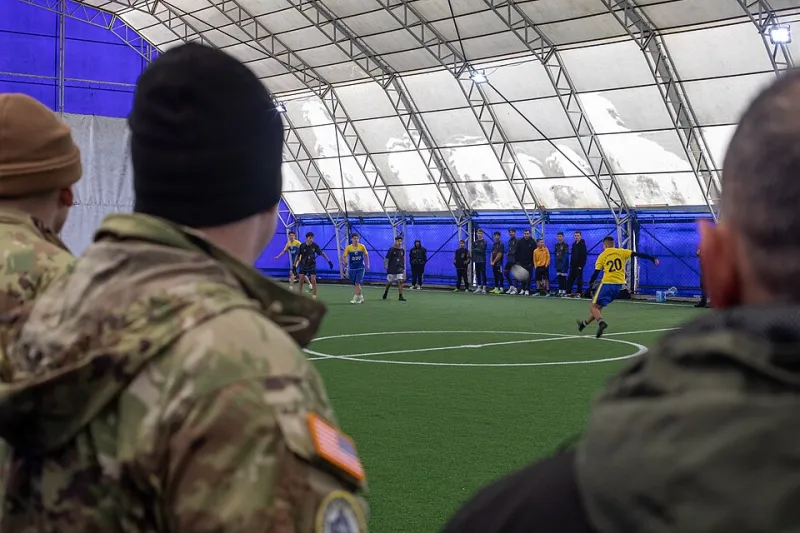
Photo: Cpl. Paul Peterson, Public domain, via Wikimedia Commons
Here's a number that should bother every parent reading this: youth and high school sports organizations across Ohio are reporting referee shortages so severe that games are being postponed, rescheduled, or played with a single official instead of a full crew.
This isn't a Cleveland problem specifically. It's a national problem. But it shows up here, in our gyms and on our fields, every weekend. And if we're honest with ourselves, a good chunk of the cause is standing in the bleachers, coffee in hand, screaming about a call from thirty feet away.
Where the Refs Went
Talk to the people who assign officials for local rec leagues and school sports, and the story repeats itself. Veteran refs — the ones with twenty years of experience who could manage any game — are retiring early. The pipeline of new officials replacing them has slowed to a trickle.
Why would anyone sign up? The pay is modest. The certification process takes time. And the reward, more often than anyone should tolerate, is being yelled at by a parent who watched one angle of one play from a bad seat.
The National Federation of State High School Associations has documented this exodus nationwide, and surveys of departing officials put adult behavior at or near the top of the list of reasons they quit. Not the money. Not the schedule. The abuse.
The Local Cost
In Cleveland's rec leagues, the shortage is already reshaping the season. Leagues are consolidating schedules. Some games run with volunteer officials — often teenagers working their first job. That's a fine learning experience for the kid, but it's also a kid being set up to absorb the frustration of a grown adult who thinks a missed call in a seventh-grade basketball game is a moral failing.
Every official who walks away takes experience with them. The less experienced the officiating pool gets, the more calls get missed, the angrier the stands get, and the faster the next person quits. It's a doom loop, and it runs on our bad behavior as fuel.
The Ref Doesn't Owe You Anything
Let's say the uncomfortable part plainly: the official at your kid's game owes you nothing. Not an explanation. Not perfection. Not the outcome you wanted.
They owe the game effort and fairness. That's it. They're human beings performing a genuinely difficult job in real time, at speeds the human eye wasn't built to adjudicate, for wages that wouldn't cover your monthly streaming subscriptions.
And here's the part that actually matters: your kid is watching how you treat them. Every study on youth sports retention says the same thing — kids quit when the environment turns toxic, and the loudest source of toxicity is almost never the players. It's the adults.
What Better Looks Like
This isn't a call for silence. Passion is part of sports, and Cleveland has passion to spare. It's a call for proportion.
Cheer for your kid. Groan at a bad call if you must. But leave the personal attacks at home, and if you genuinely love the game, consider the most radical option available: get certified and officiate yourself. Nothing recalibrates your sympathy for the person in the stripes like wearing them.
Leagues can help too. Clear codes of conduct with actual enforcement. A designated league official to handle parent complaints so refs don't have to. Some organizations have experimented with silent sidelines — two minutes of no coaching or commentary — and the kids, universally, report playing better.
The Stakes
The next decade of youth sports in this city depends on whether games can be staffed. No officials means no games. No games means no pipeline to high school rosters, no college scholarships, no Olympic dreams for the handful who'd ever get there — and, more importantly, no Saturday mornings, no team friendships, no lessons about effort and failure for the thousands of kids who just want to play.
The ref doesn't owe you anything. But the kids owe it to themselves to have a season. Let's act like it.