Broken, Not Finished: The Northeast Ohio Athletes Who Fought Their Way Back to the Arena
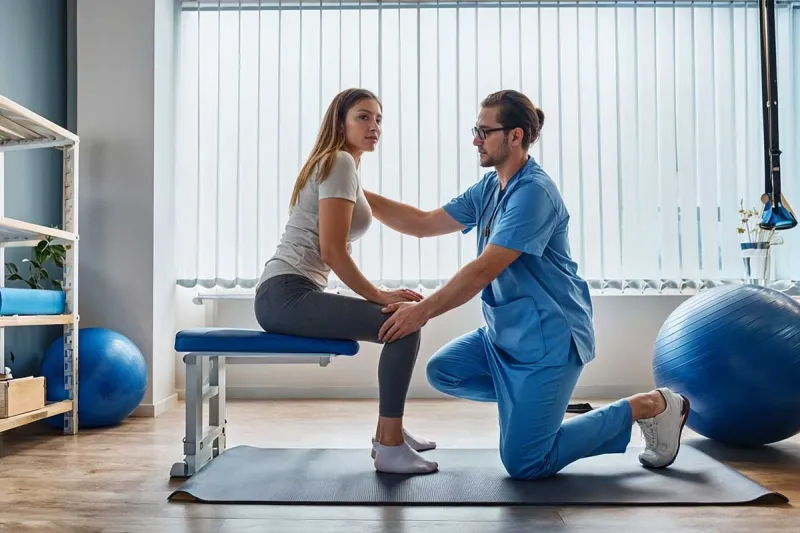
Photo: athlete physical therapy rehabilitation comeback sports injury recovery, via www.aligncarephysicaltherapy.com
There's a moment every injured athlete knows. It's not the pop of a ligament or the crack of bone. It's the silence that follows — the quiet that fills the space where your athletic identity used to live. For a lot of Cleveland-area competitors, that silence is the hardest thing to overcome.
But some of them come back. And some of them come back better.
We spent time with athletes, trainers, sports medicine doctors, and mental health specialists across Northeast Ohio to understand what separates the comeback kids from those who never quite find their footing again. What we found was equal parts science, stubbornness, and community.
When the Body Says Stop
Ask any sports medicine professional at a Northeast Ohio clinic and they'll tell you the same thing: the physical injury is often the easier part to treat. It's the psychological fallout that catches athletes off guard.
"We can map out a twelve-week ACL protocol," says one physical therapist working out of a sports rehab center in the Cleveland suburbs. "What we can't always prepare athletes for is the emotional timeline. Those don't match up, and that gap is where a lot of people get lost."
For Marcus, a 24-year-old middle-distance runner who trains with a local club affiliated with USA Track and Field's Ohio chapter, a tibial stress fracture two years ago didn't just sideline him — it unraveled everything. "Running was how I processed stress, how I socialized, how I measured myself," he says. "When it was gone, I genuinely didn't know who I was."
His story isn't unusual. Across Cleveland's youth and adult athletic programs, coaches report that the mental health dimension of injury recovery is increasingly part of the conversation — and increasingly, it's being taken seriously.
The Science of Coming Back
Sports medicine has come a long way in Northeast Ohio. Between the university-affiliated programs, private rehab facilities, and the athletic training resources connected to regional Olympic development programs, Cleveland athletes have access to recovery infrastructure that rivals bigger markets.
But the clinical piece is only part of the picture. Dr. Elena Vasquez, a sports psychologist who works with competitive athletes throughout the Cleveland metro area, describes a consistent pattern she sees in her practice. "The athletes who struggle most after injury are the ones who've built their entire self-concept around performance," she explains. "When that's threatened, it feels existential. Literally. They don't know what they're worth if they're not competing."
Conversely, the athletes who tend to navigate recovery most successfully share a few key traits. They're able to tolerate uncertainty. They have support systems outside of sport. And critically, they're able to stay connected to their athletic community even when they can't participate directly.
"Watching practice when you're injured is brutal," admits Keisha, a 19-year-old club volleyball player from the east side of Cleveland who tore her rotator cuff during a tournament last spring. "But my coach kept including me in film sessions, kept asking my opinion on strategy. That kept me feeling like I was still part of something."
What the Rehab Room Doesn't Tell You
One of the more underreported aspects of athletic comeback stories is the financial and logistical reality, especially for younger athletes and their families. Rehab is expensive. Time off school or work creates pressure. And for athletes chasing Olympic development pathways, a serious injury can feel like it closes doors permanently.
"There's this clock in your head," says Tyler, a 22-year-old wrestler from the Akron-Cleveland corridor who suffered a serious shoulder separation in his junior year of college. "You're already doing the math. If I'm out eight months, I miss this qualifier, I miss that season, and suddenly you're questioning whether the whole dream is still viable."
For Tyler, the turning point came when a mentor — a former competitive athlete who now coaches in the area — reframed the timeline for him. "He told me that the athletes he'd seen come back strongest were the ones who used the injury period to build everything they'd been neglecting. Nutrition, film study, upper body strength that didn't stress the shoulder. I basically became a student of the sport in a way I never had been before."
That reframe — from injury as interruption to injury as investment — shows up repeatedly in comeback narratives across Cleveland's athletic community.
The Mental Health Piece Is No Longer Optional
Dr. Vasquez is direct about this: "Five years ago, I had to convince coaches and athletic directors that mental health support during injury recovery was worth their time. Now they're calling me. The culture has shifted."
That shift is visible in how Northeast Ohio's youth sports programs are approaching the issue. Several local athletic organizations have begun integrating mental health check-ins as a standard part of injury protocols — not as a crisis response, but as routine support. The goal is to normalize the emotional difficulty of recovery before it becomes a bigger problem.
For Marcus, the runner, accessing a sports psychologist through his club's network was the difference-maker. "I'd never talked to anyone like that before. I thought it was for people who were really struggling. But everyone who's injured is struggling, they just don't always say it."
He returned to competition seven months after his fracture. Last fall, he posted a personal best.
Cleveland's Secret Weapon: Community
If there's one thing that distinguishes the comeback stories coming out of Northeast Ohio, it might simply be this: the athletic community here is tight-knit in a way that doesn't always get acknowledged.
Keisha went back to her first match eleven months after her surgery. She says the thing that carried her wasn't any single therapy session or training protocol. It was the group chat that never stopped buzzing. It was the teammates who showed up to her rehab appointments just to sit in the waiting room. It was the coach who texted her after every match with what she would have contributed.
"Cleveland athletes take care of each other," she says, and there's no hesitation in it.
That community fabric — woven through rec centers, club programs, high school gyms, and Olympic development pipelines across the region — turns out to be one of the most powerful rehabilitation tools available. And it doesn't cost a thing.
Coming Back Stronger Isn't a Cliché
It's tempting to dismiss the "came back stronger" narrative as feel-good sports mythology. But the athletes and professionals we spoke with in Cleveland push back on that cynicism hard.
"Stronger doesn't always mean faster or higher-ranked," Dr. Vasquez says. "Sometimes it means more resilient. More self-aware. A better teammate. Those things matter in a long athletic career, and they matter in life after sport too."
For Tyler, now competing at the regional level and eyeing a national qualifier, the shoulder injury he once feared would end his career looks different in retrospect. "I know my body better than I ever did. I know my mind better. I wouldn't trade that, honestly."
That's the quiet truth underneath Cleveland's comeback stories. The arena these athletes are fighting to return to isn't just a gym or a track or a court. It's a version of themselves they refused to let go of — and in Northeast Ohio, there's a whole community ready to help them get back there.